Henrik Meier · 27 October 2026
Larkspur Bloom Timelines Offer New Clues on Shifting Mountain Snowmelt Cycles
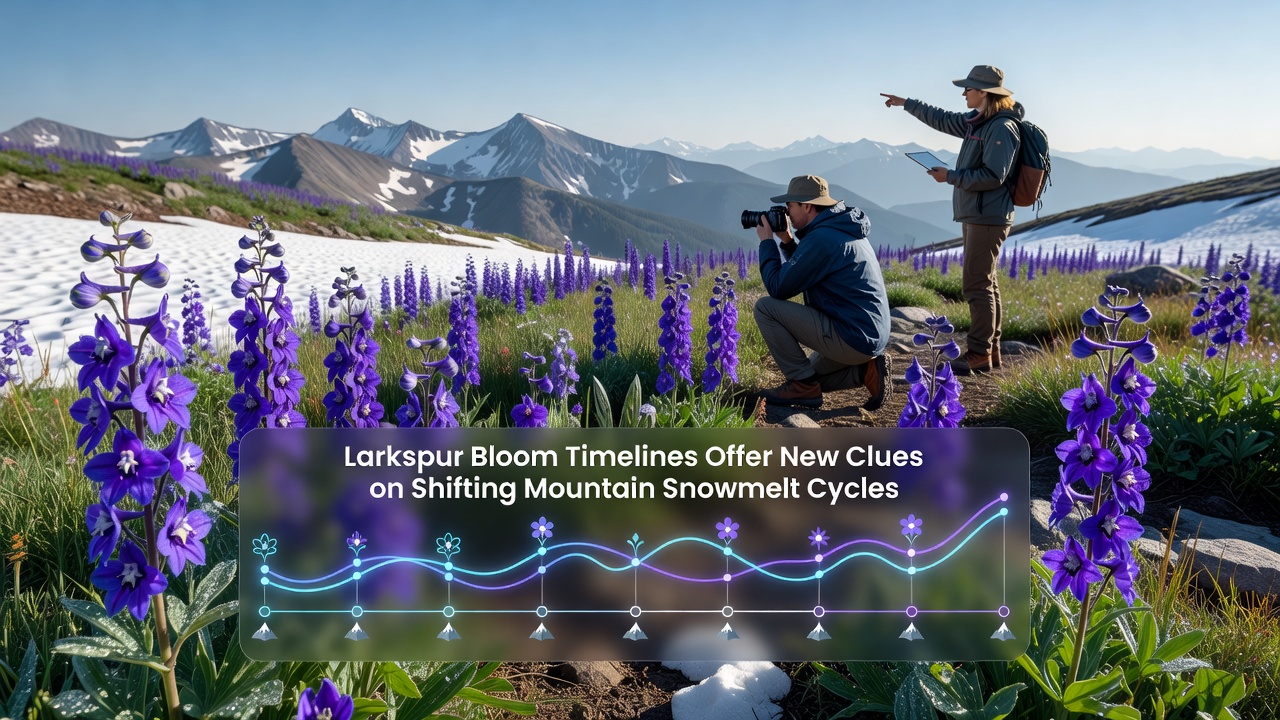
Botanists and hydrologists have combined long-term field observations of larkspur bloom dates with snowpack measurements to identify precise correlations between flower development and the timing of spring snowmelt in western mountain ranges. Data gathered from permanent monitoring plots in the Rocky Mountains show that Delphinium species respond quickly to changes in soil moisture availability once snow cover disappears, which allows researchers to use bloom records as indirect indicators of broader hydrological shifts.
Monitoring programs initiated in the early 2000s have produced multi-decade datasets that track first flowering dates for several larkspur species at elevations between 2,500 and 3,500 meters. These records reveal that peak bloom now occurs an average of 10 to 14 days earlier than measurements taken during the 1990s at comparable sites, while snowmelt completion dates have advanced by similar margins according to snow telemetry stations operated by federal agencies.
Integrating Phenology Records with Hydrological Data
Scientists overlay larkspur bloom timelines onto daily snow-water equivalent readings collected by automated sensors, and the resulting graphs demonstrate that flowering begins consistently once cumulative snowmelt reaches a threshold of approximately 80 percent of peak winter accumulation. This relationship holds across multiple drainages, which suggests the plants serve as reliable biological markers for snowmelt progression even in remote basins where direct instrumentation remains sparse.
Observers note that larkspur populations located on south-facing slopes display greater year-to-year variability in bloom timing compared with those on north-facing aspects, because southern exposures experience faster radiation-driven melt once temperatures rise above freezing. Northern sites retain deeper snowpacks longer, which buffers against early-season warming and produces more stable flowering schedules that still shift gradually as overall winter precipitation patterns evolve.
Regional Patterns Across Multiple Mountain Systems
Studies conducted in the Sierra Nevada and the Cascade Range report parallel advances in larkspur bloom dates that align with earlier snow disappearance, although the magnitude of change differs by latitude and local topography. In the southern Rockies, where winter snowpacks have declined more sharply, bloom advancement reaches 18 days over the past three decades, whereas northern sites show smaller but consistent shifts of 7 to 9 days.
Researchers at institutions including the University of Colorado have cross-referenced these botanical records with streamflow data from the U.S. Geological Survey, confirming that earlier larkspur flowering coincides with earlier peak runoff in headwater streams. This linkage provides an independent line of evidence that snowmelt-driven water release is occurring progressively earlier each spring.
Implications for High-Elevation Ecosystems
Earlier snowmelt and corresponding advances in larkspur bloom create temporal mismatches with certain pollinators whose emergence cues remain tied to day length rather than temperature or moisture. Field surveys document reduced visitation rates by bumblebees during the first week of larkspur flowering at sites where bloom now precedes typical bee activity by several days, although later-emerging pollinators still interact with the plants once temperatures stabilize.
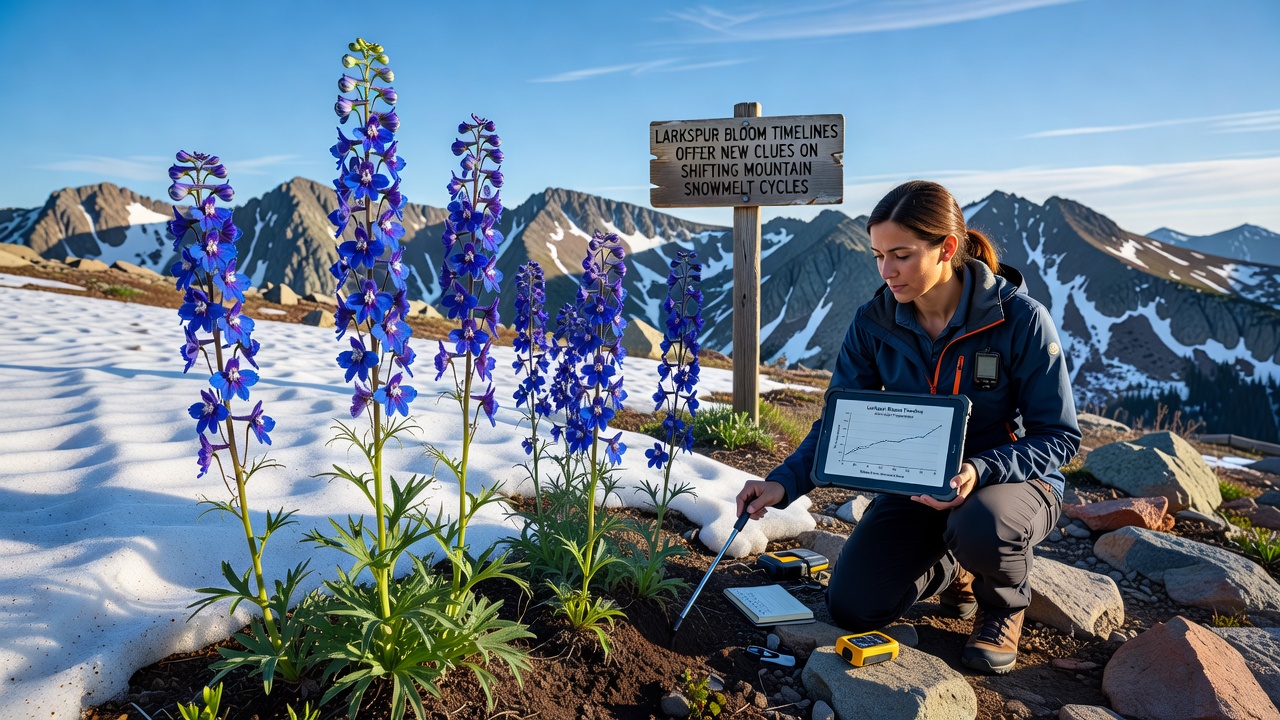
Soil moisture depletion follows snow disappearance more rapidly under current climate conditions, which shortens the window of adequate water availability for larkspur root systems. Measurements taken through October 2026 at long-term plots indicate that post-melt soil drying occurs 12 to 16 days sooner than conditions recorded in the same locations during the 1980s, limiting the duration of active growth and seed production for these perennial species.
Future Monitoring Directions
Expanded sensor networks now combine time-lapse cameras, temperature loggers, and soil-moisture probes at additional larkspur sites across the Intermountain West, generating higher-resolution data that capture daily phenological transitions. These automated systems reduce reliance on periodic human visits while maintaining continuity with historical datasets that began in the late twentieth century.
Analyses scheduled for release in 2027 will incorporate satellite-derived snow-cover maps alongside ground-based bloom observations, allowing researchers to scale findings from individual meadows to entire watersheds. Preliminary comparisons already show that larkspur bloom maps derived from high-resolution imagery match field records within a three-day margin, which validates the approach for broader regional assessments.
Conclusion
Larkspur bloom timelines have emerged as practical tools for tracking shifts in mountain snowmelt cycles because the plants integrate multiple environmental signals into a single observable event. Continued collection of these records alongside instrumented snow and stream data supplies an expanding evidence base that documents ongoing changes in high-elevation hydrology across western North America.